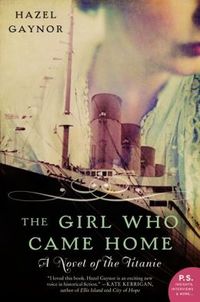
The tragedy of the Titanic continues to fascinate us. This well-written story shows the point of view of some of the ordinary travellers aboard her - Maggie Murphy, leaving Ireland with her family, is one. THE GIRL WHO CAME HOME starts with her last moments in the only home she has known, a rural Irish cottage, as fourteen people from her small parish in County Mayo pack up and head off for a better life in America. Maggie is leaving behind a young man, Seamus Doyle, and she promises to write.
Harry Walsh is a crewman, a steward with White Star Lines, proud to be working on the maiden voyage of such a fine vessel. He's only assigned to the third class passengers, but he's determined to give them equally as good a service as the millionaires aboard. The scale of the ship in dock is quite staggering to all viewing her in Southampton. Some of the wealthy people even bring their small dogs aboard.
Fast forward to Grace Butler, darting admiring looks at a fellow student's Converse sneakers during journalism class. Grace has a Chicago-Irish background and the Chicago Tribune invites her to send them a feature article. All she needs is a topic... for personal reasons it is two years before she goes ahead and writes this, using as inspiration her great-grandmother Maggie's story of surviving the Titanic shipwreck. Maggie had shock and survivor's guilt, and did not speak of her experience until this time.
Details are lovely with mentions of the Foxford Woollen Mills in Ireland and apple blossoms falling like confetti on the heads of giggling girls. I was struck by the simplicity of the few possessions carried by the steerage travellers. An unmarried Irish lady has set herself up well in America and travels back to visit relatives regularly, filling their heads with descriptions of a splendid life. Telegrams, or Marconigrams as they were called, from the actual period dot the book, bringing home the aching reality. While we know the fate of the ship, there are many secondary characters whose lives hang in the balance, creating tension. Grace learns that we should never take life for granted; seeing how her great-grandmother picked herself up inspires her to get on with being the best she can be and stop denying her talents.
Hazel Gaynor based her book on the true story of the Addergoole Parish and researched thoroughly while writing THE GIRL WHO CAME HOME. She is an English writer who now lives in Ireland. Her retelling of this fateful few days, coupled with the modern account, brings to life the heart and soul of the people caught up in this disaster. Reading it helps us to a better understanding of the period, the loss and the survivors.
No excerpt available.











 © 2003-2026