Snowbound secrets, shifter wars, family lies, and epic battles — September delivers it all.
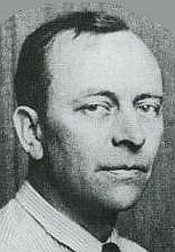
Max Brand
Photo Credit: Frederick Faust trust
Frederick Schiller Faust (May 29, 1892 – May 12, 1944) was an American author known primarily for his thoughtful and literary Westerns. Faust wrote mostly under pen names, but today is primarily known by only one, Max Brand. Others include George Owen Baxter, George Evans, David Manning, John Frederick, Peter Morland, George Challis, and Frederick Frost. Faust was born in Seattle to Gilbert Leander Faust and Elizabeth (Uriel) Faust, who both died soon after. He grew up in central California, and later worked as a cowhand on one of the many ranches of the San Joaquin Valley. Faust attended the University of California, Berkeley, where he began to write prolifically for student publications, poetry magazines, and, occasionally, newspapers. He did not attain a degree, as he was deemed a troublemaker, whereupon he began to travel extensively. He joined the Canadian Army in 1915, but deserted the next year and went to New York City. During the 1910s, Faust started to sell stories to the pulp magazines of Frank Munsey, including All-Story Weekly and Argosy Magazine. When the United States joined World War I in 1917, Faust tried to enlist but was turned down. He married Dorothy Schillig in 1917, and the couple had three children. In the 1920s, Faust wrote extensively for pulp magazines, especially Street & Smith’s Western Story Magazine, a weekly for which he would write over a million words a year under various pen names, often seeing two serials and a short novel published in a single issue. In 1921 he suffered a severe heart attack, and for the rest of his life suffered from chronic heart disease. His love for mythology was a constant source of inspiration for his fiction, and it might be that his classical influences, as well as his literary inclinations, are part of the reason for his success at genre fiction. The classical influences are certainly noticeable in his stories, many of which would inspire films. He created the Western character Destry, featured in several filmed versions of Destry Rides Again, and his character Dr. Kildare was adapted to motion pictures, radio, television, and comic books. Beginning in 1934 Faust began publishing fiction in upscale slick magazines that paid better than pulp magazines. In 1938, due to political events in Europe, Faust returned with his family to the United States, settling in Hollywood, working as a screenwriter for a number of film studios. At one point Warner Brothers was paying him $3,000 a week (at a time when that might be a year’s salary for an average worker), and he made a fortune from MGM’s use of the Dr. Kildare stories. He was one of the highest paid writers of that time. Ironically, Faust disparaged his commercial success and used his own name only for the poetry that he regarded as his true vocation. When World War II broke out, Faust insisted on doing his part, and despite being well into middle age and having a heart condition, he managed to become a front line war correspondent. Faust was quite famous, and the soldiers enjoyed having this popular author among them. While traveling with American soldiers as they battled in Italy in 1944, Faust was mortally wounded by shrapnel. He was personally commended for bravery by President Franklin D. Roosevelt. Faust managed a massive outpouring of fiction, rivaling Edgar Wallace and Isaac Asimov as one of the most prolific authors of all time. He wrote more than 500 novels for magazines and almost as many stories of shorter length. His total literary output is estimated to have been between 25,000,000 and 30,000,000 words. Most of his books and stories were turned out at breakneck rate, sometimes as quickly as 12,000 words in the course of a weekend. New books based on magazine serials or were previously unpublished continue to appear, so that Faust has averaged a new book every four months for seventy-five years. Beyond this, some work by him is newly reprinted every week of every year, in one format or another, somewhere in the world. Wikipedia










 © 2003-2026