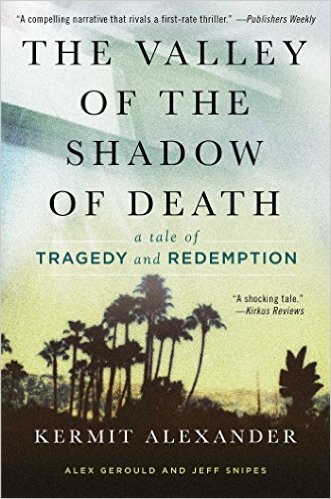
On August 31, 1984, Kermit Alexander's world turned upside down in an instant. This former San Francisco 49ers football player saw his entire family changed when three men walked into his mother's home and coldly executed his mother, sister, and nephews. Alexander opens up and tells the inside story of his devastating loss and how he finally finds hope once again in THE VALLEY OF THE SHADOW OF DEATH.
Alexander immerses readers into a dark, sometimes despairing story as we are plunged headlong into the questions, grief, and anger that surround any loss, never mind one so disturbing. Alexander eloquently intertwines the history of his own family and the history of South Central Los Angeles into the storyline. However, it is his stark portrayal of the killers, particularly Tiequon Cox, that broke my heart - not for the man Cox became, but for the missed opportunities by school officials and coaches along the way.
Tiequon Cox, along with the other convicted killers of Alexander's family, shows absolutely no remorse. Alexander doesn't shy away from relaying to the reader the horrors that Tiequon Cox faced as a child, horrors no child should ever face, as he paints a portrait of a child forgotten and ultimately hardened by the gangs. My heart aches for Alexander's struggle even as I cheer for the subsequent redemption and hope he discovers after his loss.
I rarely read true crime but THE VALLEY OF THE SHADOW OF DEATH caught my eye because it features a former 49er football player. Little did I expect to also find a story that reaffirms my work as a school social worker. Kermit Alexander's painful but inspiring story reminds us of how we can find hope even after the grimmest of times.
No excerpt available.











 © 2003-2026