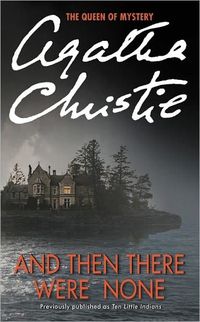
Ten strangers brought together on an island by a mysterious host known only as Mr. U.N. Owen. No boat. No communication with the outside world. Ten strangers who find out from a recording placed on a phonograph that they are all accused of murder. So when the accused start being killed, one by one, following the lines of an old nursery rhyme, they all look like pretty good suspects. This re- issue of AND THEN THERE WERE NONE is an excellent introduction to Agatha Christie. It is one of those genius mysteries where it is all but impossible to guess the culprit, yet when it is revealed at the end, you see that it could not have been done any other way.
The atmosphere on the island is charged with danger, as a violent storm descends, but Mr. Owen's victims attempt to carry on with a sense of civility, which begins to erode as they each make their private guesses as to the identity of the murderer. The characters are engaging, varied as they are in circumstances and in levels of guilt, from the couple hired as a cook and butler by Mr. Owen, who may have killed an elderly former employer by withholding medication, to Philip Lombard, a soldier of fortune who remorselessly starved an entire African tribe when he stole their food.
While this book was previously titled TEN LITTLE INDIANS, in this edition the Indians in the nursery rhyme have been changed to soldier boys, and the mysterious island's name from Indian Island to Soldier Island. This was not the first change made to this book to suit changing sensibilities since it was first published in 1939. Plus, Christie herself reworked the entire ending for the 1943 play edition, the same ending used in the 1945 film (which, interestingly, uses Indians, rather than soldier boys). This is Agatha Christie's most often adapted work. It gives credit to the appeal of the story and the sheer brilliance of the who-done-it that so many people worked to keep the book relevant and available.
No excerpt available.






 © 2003-2026