
Purchase
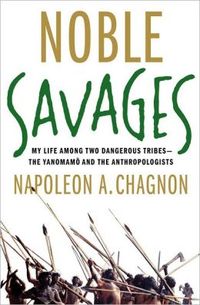
My Life Among Two Dangerous Tribes -- the Yanomamo and the Anthropologists
Simon & Schuster
February 2013
On Sale: February 13, 2013
544 pages
ISBN: 0684855100
EAN: 9780684855103
Kindle: B006VJN2FE
Hardcover / e-Book
Add to Wish List
Non-Fiction Memoir
ONE OF THE MOST IMPORTANT SCIENTIFIC MEMOIRS OF OUR TIME When Napoleon Chagnon arrived in Venezuela’s Amazon region in 1964 to study the Yanomamö Indians, one of the last large tribal groups still living in isolation, he expected to find Rousseau’s “noble savages,” so-called primitive people living contentedly in a pristine state of nature. Instead Chagnon discovered a remarkably violent society. Men who killed others had the most wives and offspring, their violence possibly giving them an evolutionary advantage. The prime reasons for violence, Chagnon found, were to avenge deaths and, if possible, abduct women. When Chagnon began publishing his observations, some cultural anthropologists who could not accept an evolutionary basis for human behavior refused to believe them. Chagnon became perhaps the most famous American anthropologist since Margaret Mead—and the most controversial. He was attacked in a scathing popular book, whose central allegation that he helped start a measles epidemic among the Yanomamö was quickly disproven, and the American Anthropological Association condemned him, only to rescind its condemnation after a vote by the membership. Throughout his career Chagnon insisted on an evidence-based scientific approach to anthropology, even as his professional association dithered over whether it really is a scientific organization. In Noble Savages, Chagnon describes his seminal fieldwork—during which he lived among the Yanomamö, was threatened by tyrannical headmen, and experienced an uncomfortably close encounter with a jaguar—taking readers inside Yanomamö villages to glimpse the kind of life our distant ancestors may have lived thousands of years ago. And he forcefully indicts his discipline of cultural anthropology, accusing it of having traded its scientific mission for political activism. This book, like Chagnon’s research, raises fundamental questions about human nature itself.
 Media BuzzAll Things Considered - February 16, 2013
| 










 © 2003-2026