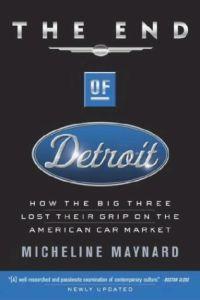
In the 1990s, Detroit’s Big Three automobile companies were riding high. The introduction of the minivan and the SUV had revitalized the industry, and it was widely believed that Detroit had miraculously overcome the threat of foreign imports and regained its ascendant position. As Micheline Maynard makes brilliantly clear in THE END OF DETROIT, however, the traditional American car industry was, in fact, headed for disaster. Maynard argues that by focusing on high-profit trucks and SUVs, the Big Three missed a golden opportunity to win back the American car- buyer. Foreign companies like Toyota and Honda solidified their dominance in family and economy cars, gained market share in high-margin luxury cars, and, in an ironic twist, soon stormed in with their own sophisticatedly engineered and marketed SUVs, pickups and minivans. Detroit, suffering from a “good enough” syndrome and wedded to ineffective marketing gimmicks like rebates and zero-percent financing, failed to give consumers what they really wanted— reliability, the latest technology and good design at a reasonable cost. Drawing on a wide range of interviews with industry leaders, including Toyota’s Fujio Cho, Nissan’s Carlos Ghosn, Chrysler’s Dieter Zetsche, BMW’s Helmut Panke, and GM’s Robert Lutz, as well as car designers, engineers, test drivers and owners, Maynard presents a stark picture of the culture of arrogance and insularity that led American car manufacturers astray. Maynard predicts that, by the end of the decade, one of the American car makers will no longer exist in its present form.
Media Buzz
Diane Rehm Show - NPR - March 19, 2014 Diane Rehm Show - NPR - December 8, 2005














 © 2003-2026