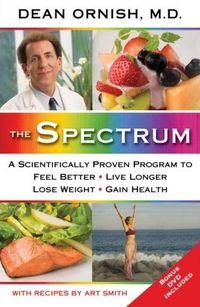
In THE SPECTRUM, Dr. Ornish shows us how to personalize a way of eating and a way of living based on your own health goals, needs, and preferences. Here’s how it works:
Since THE SPECTRUM is about freedom of choice, there is no diet to get on and no diet to get off. Nothing is forbidden. No guilt, no shame, no pressure. THE SPECTRUM is based on love– joy of living, not fear of dying. Feeling better, not denying yourself pleasure.
First, determine your health and wellness goals. Do you want to lose weight? Do you have high cholesterol? Is diabetes a problem in your family? Based on your individual needs and goals, THE SPECTRUM has examples of six individually-tailored lifestyle programs ideally suited for you: lowering cholesterol, losing weight, lowering blood pressure, preventing/reversing diabetes, preventing/reversing certain types of prostate and breast cancer, preventing/reversing heart disease.
Each personalized plan in THE SPECTRUM has 3 components: Nutrition, Stress Management, and Exercise.
The Nutrition Spectrum The Nutrition Spectrum consists of five groups. Group 1 is the healthiest end of the spectrum and Group 5 is the least healthful end. To determine your current place on the Nutrition Spectrum, find the group that contains the foods you tend to eat most of the time. Then, according to your needs, preferences, and goals, decide how far and how quickly you want to move in a more healthful direction. For example, if you typically eat predominantly foods in Group 4 and you want to lower your cholesterol 50 points, begin by incorporating more foods from Groups 2 and 3. If that’s sufficient to achieve your goal, great; if not, you can move more towards the healthier end of THE SPECTRUM by consuming more foods from Groups 1 and 2.
In general, the closer you move towards Group 1, the more benefits you’re likely to gain and the more quickly you’ll experience them. If you’re healthy, you many not need or want to make very many changes at all–the “ounce of prevention.” On the other hand, if you are trying to reverse heart disease or diabetes, you’ll probably need to make bigger changes–the “pound of cure.”
The recipes by Art Smith for THE SPECTRUM are designed so that each base recipe is in Group 1. Depending on your health and wellness goals, each recipe offers healthy variations. For example, the Vegetable Chili recipe is a delicious version of a classic recipe that begins in Group 1 with predominantly plant-based whole foods that are very low in fat, sugar, salt, and calories. Variations listed at the end of the recipe include adding a cup of pitted higher-fat black olives (which moves this recipe to a Group 2 dish) and/or adding one pound of turkey breast sausage to the recipe (which moves this recipe to a Group 4 dish).
The Stress Management Spectrum Stress can have a negative impact on just about every part of your body. It can suppress your immune function, cause a heart attack or stroke, increase your risk of cancer, delay wound healing, promote inflammation, cause you to gain weight, impair your memory, cause depression, exacerbate diabetes, and worsen sexual function. Just for starters. Stress also makes you age faster even at a genetic and cellular level. (over) Some people thrive on stress, and it doesn’t cause them to get sick. Studies have found that they can turn it on when needed, but they can also turn it off.
They have appropriately elevated levels of stress hormones at work during the day, but their stress hormones drop sharply at night. In other words, they can turn it off. In contrast, people who feel chronically stressed and anxious have stress hormones that remain elevated, and this predisposes them to a wide variety of illnesses.
Stress-management techniques can help you turn it off. They are not about withdrawing from the world; rather, they enable you to embrace it more fully and effectively. When you're feeling less stressed, you can think more clearly and creatively, making it easier to find constructive solutions. When you’re less stressed, you’re more empowered.
THE SPECTRUM provides you with the fundamental tools for stress management. These include:
• Breathing• Enhancement of social support • Yoga & Meditation• Reduction of stimulants (both physical and mental) • Exercise• Practicing forgiveness, altruism, compassion, service
A DVD of inspiring, beautiful, and peaceful guided meditations by Anne Ornish is included with every copy of THE SPECTRUM. Anne is Vice President of the non-profit Preventive Medicine Research Institute where she directs all activities related to stress management training and psychosocial support. She has advanced training in yoga and meditation and was featured on the cover of the August 2006 issue of Yoga Journal magazine.
This DVD has guided meditations of different lengths depending on where you are on the Stress Management Spectrum. Even one minute a day has value; those who would benefit from doing more are given the tools and resources enabling them to do so.
The Exercise Spectrum You already know that exercise is good for you and that regular, moderate exercise is one of the best things you can do for your health and well-being. What you may not know is that new research is showing that exercise beneficially affects your genes, helps reverse the aging process at a cellular level, gives you more energy, makes you smarter, and may even help you grow so many new brain cells (a process called neurogenesis) that your brain actually gets bigger. Really.
Here again is another demonstration of the theme of THE SPECTRUM: your genes are not your fate. The choices you make each day in your diet and lifestyle have a direct influence on how your genetic predisposition is expressed–for better and for worse. You’re only as old as your genes, but how your genes are expressed may be modified by exercise, diet and lifestyle choices much more than had previously been believed–and more quickly.
To gain all the health benefits of regular exercise, you don’t have to join a gym, hire a personal trainer, or organize your life around 10K’s. For example, in the Women’s Health Study, a major ongoing research project involving tens of thousands of women, those who walked briskly for just 60 to 90 minutes a week–just 15 minutes a day–cut their risk of death from heart attack and stroke in half.
Do what you enjoy, make it fun, and do it regularly. That’s it. THE SPECTRUM shows you how.
Media Buzz
CBS This Morning - March 24, 2015 Dr. Oz - July 22, 2013 Campbell Brown - January 1, 2010 Good Morning America - June 17, 2008 The View - April 4, 2008 The View - January 25, 2008 Saturday Early Show - January 5, 2008 Good Morning America - January 4, 2008







 © 2003-2026