Lamia has been on her own since her parents died and her youngest brother left Algiers as harraga, a wanderer. She lives all alone, working days in the hospital and spending nights in her crooked old family house. When a seventeen-year-old pregnant Lolita girl, Chérifa, shows up at her door with an invitation from the estranged brother, Lamia takes her in out of a sense of boredom and indignation at the world. Together the two must balance what is with what they want to be. In a land where an unwed mother can be killed to avenge honor, delicacy is both required and found in short supply. When Lamia makes the greatest mistake of her life, Chérifa runs away. Now realizing that Chérifa was the daughter she never had, Lamia has to fight her guilt in order to rescue the flighty young woman she loves so much.
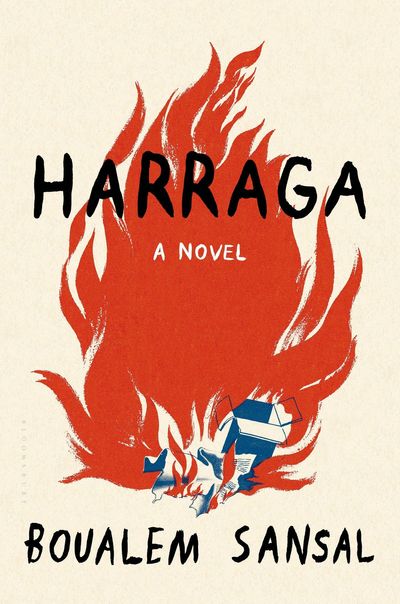
HARRAGA is a novel which takes a cultural look at Algiers and at Islam through the lens of a woman who lives in one and fears the fanatical turns of the other. Lamia is by far the best character I've seen on the page in a novel of self-discovery. She is so self-aware of her many and very real flaws. She is a self-described bitch, who shouts and screams at Chérifa and creates mysteries out of her neighbors for her own amusement. Chérifa in turn is a mystery, making herself at home in Lamia's house and routine one moment and vanishing the next. She carries the baby like the most serious of mothers would at first and then like it will not change her life one bit. These two are both full of secrets and fire, the kind that bonds women even in the most challenging of circumstances.
The poetry written by Lamia in the contents of the novel is both haunting and wonderful in its quality. I think this poetry is what really captures the soul of Lamia. Her struggles, her dreams, her actions are all articulated and justified in these poems. If you read this book for no other reason, read for the poetry.
HARRAGA lays bare the expectations of the reader and sticks a knife right in the heart. It's a novel which changes the perceptions of the reader. Lamia and Chérifa share a lesson with us all that we need, whether or not we know it yet. The dreams of one, the loss of the other, and it's up to the reader to decide which is which. This book really causes deep thought and is one which I have no intention of forgetting.
No excerpt available.









 © 2003-2026