The First World War - the War to end all wars is over. The war Englishmen had eagerly signed up to fight in thinking it would be over by 1914 summer's end is finally over. It is now 1919 and the party is definitely over. Four long years of hardship, millions of men killed or injured and women entering the labour force like never before and expertly doing jobs they had never dreamed they would be doing.
Much has changed during the war and the rigid English class structure significantly altered, but its centuries old bones still are fully fossilized in place. Yet now, after leaving her job as a nurse in a hospital for soldiers suffering from Neurasthenia (or what is now referred to as Post-Traumatic Stress Disorder) and returning to her job at Miss Rathbone's constituency office in Liverpool, it seems to Charlotte Brown as if nothing had changed and things are worse. Life is still full of hardship. Women across the country have been quietly told to leave or have been kicked out of jobs they desperately need or enjoy doing to give work to returning veterans. Even at that, many badly injured soldier are begging on street corners or committing suicide.
Things had been so different before the war. After graduating with her degree and not finding the work she wants, Charlotte encounters another Oxford scholar with a smile that captures her heart. Edward offers her a job as governess for his sister, Lily. Charlotte is exactly the kind of intelligent and independent woman he would like his sister to become. Now, after so many years and changes, can Charlotte come to terms with her feelings for him? Will Edward recover from the physical and mental wounds from his horrible war experiences? Will the chasm of class and wealth remain a barrier to their friendship?
Charlotte endures more than her share of disappointments, yet, from the unfortunate clients she works with, she knows how well off she is. Her heart burns with compassionate for their situations and she can't help but speak out on the social injustices she sees daily. As her work brings her in contact with a young and good looking editor of a radical newspaper, she will soon have to make choices about her future. What path should she take?
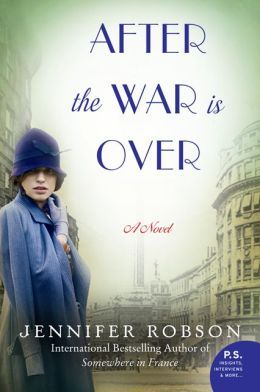
AFTER THE WAR IS OVER is written by Jennifer Robson, the international bestselling author of Somewhere in France and picks up on the lives of Charlotte Brown and that of Edward Neville-Ashford, Earl of Cumberland. While both books can be read as independent stories, reading Somewhere in France first provides a greater backdrop to the war, its horrors and class attitudes, this making AFTER THE WAR IS OVER a much richer historical and reading experience.
I am greatly taken with how Robson totally draws me into the starkness of the post-WWI times. Her narration of the story and authentic descriptions of the times seems as if she was there in person. Robson's vocabulary and description of the class attitudes, language, and customs brings alive every nuance and gesture from the cutting glance of an aristocratic matron to the anger of a proud man stripped of everything and unable to support his family from starving. Robson is particularly effective at recreating the feelings and reactions from those suffering PTSD to those dealing with them.
Robson has an impressive background to draw upon from being a Vimy Ridge tour guide, to having a doctorate from Oxford in British economy and social history as well as considerable access to her father, the acclaimed historian Stuart Robson and his WWI expertise. Jennifer Robson's talent shines in turning this wealth of information and experiences to making AFTER THE WAR IS OVER such an insightful and very readable story. A book that history fans will relish with delight!
In addition to Robson's skills in providing an authentic context of the times, she excels at character development, both with main and secondary characters and uses the both the situations of Charlotte and her friends to highlight restrictions imposed on women by society and themselves. This complexity is well reflected in Charlotte from being raised by a vicar and his wife to being Lily's governess. From those influences, Charlotte retains many conservative inhibitions, such as not liking modern bathing suits; yet, her work experiences fuels her radical views for social justice.
All in all, AFTER THE WAR IS OVER is definitely worthy of reading by those liking history or pre to post WWI era fiction. I also highly recommend it for book clubs (Resources and Reading Guide included) for lively discussions. Enjoy!
No excerpt available.







 © 2003-2026