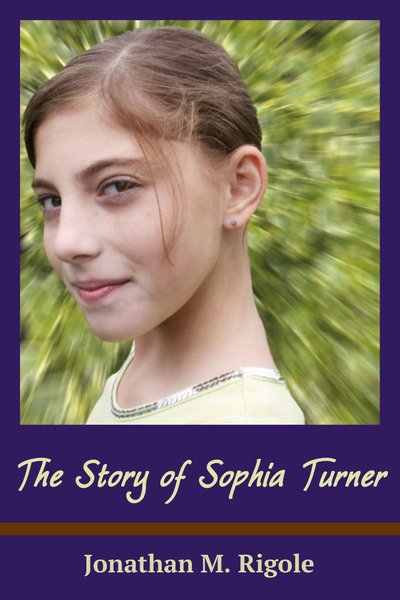
Sophia lives in a children's home and keeps a notebook in which she introduces herself and tells us about her life. As not all young people grow up in the same home environment this kind of story is a good way to help young people relate to the experiences of others. THE STORY OF SOPHIA TURNER has some amusing aspects.
Sophia has a father who lives elsewhere and touchingly her idea of a great day out would be going to a beach with her dad. The adults around her seem kind but strict and she is tired of being the best-behaved girl. Just for a change, Sophia decides to be naughty; then she plays a few tricks and has to wait to see if anyone will notice. I found this quite fun as Sophia clearly doesn't intend to hurt anyone by her tricks, just to go outside of the rules. While this story is set in England the location is hardly noticeable so any kid could relate to the story.
THE STORY OF SOPHIA TURNER is more self-interested than the author Jonathan Rigole's other work Jessica's Dolphin and there is only so much of crossed-out and re-spelt writing that I want to read, though kids might find it funny. What came across to me is that Sophia needs more to occupy her than making pictures from pasta shells, in order to grow, and even though her behaviour is attention-seeking, she is not prepared to have the attention of the entire home turned on her. I am sure she will grow into an admirable young lady and I hope we meet her again in another story.
No excerpt available.











 © 2003-2026