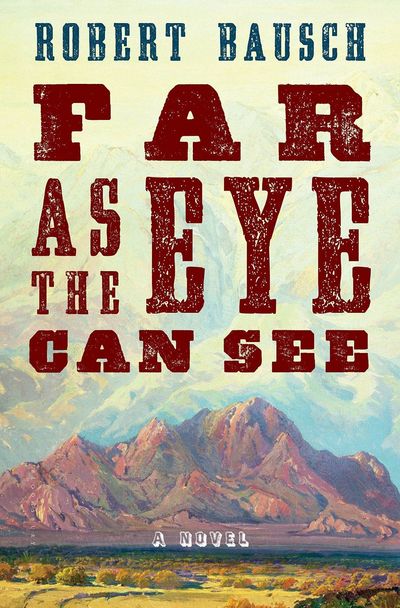
FAR AS THE EYE CAN SEE is set in the American west just after the Civil War and it's main character is a veteran named Bobby Hale. Bobby actually joins the union, collects his bonus, drops out and rejoins under a new name 9 different times. When the war is over, since he has no family waiting for him to return, he heads out west in search of land and adventure. He does not realize the volatile situation that exists between the American militia and the Indians.
At first, Bobby travels with a wagon caravan and a man named Theo who is in charge of the caravan. Theo teaches Bobby to respect the culture of the Indians and how to navigate the vast and open land of the American west.
When the caravan finally reaches Bozeman, Bobby is not sure what to do with himself, so he teams up with an Indian friend of his named Big Tree and they become fur trappers. The five years he spends with Big Tree living off of the land and traveling are some of the most peaceful and satisfying in his life. Bobby learns more about Indian culture in his travels and he gains a true friend in the process. When an Indian woman comes between them, Bobby steps aside and separates himself from Big Tree so that his friend can be happy.
The final part of FAR AS THE EYE CAN SEE deals with Bobby's adventures after he accidentally shoots an Indian woman named Ink. unlikely friendship between Bobby and Ink. Bobby feels This was my favorite part of the book as it develops the the need to protect Ink as she is running away from her husband.
AS FAR AS THE EYE CAN SEE highlights a controversial part of American history as the militia tries to build The United States "from sea to shining sea." It vividly depicts the tragic struggle between the Indians and the American government and the fact that both sides completely misunderstand each other. I loved the setting of this book in the American west and I also grew to like the character of Bobby.
Bobby Hale is a Union veteran several times over. After the war, he sets his sights on California, but only makes it to Montana. As he stumbles around the West, from the Wyoming Territory to the Black Hills of the Dakotas, he finds meaning in the people he meets-settlers and native people-and the violent history he both participates in and witnesses. Far as the Eye Can See is the story of life in a place where every minute is an engagement in a kind of war of survival, and how two people-a white man and a mixed-race woman-in the midst of such majesty and violence can manage to find a pathway to their own humanity. Robert Bausch is the distinguished author of a body of work that is lively and varied, but linked by a thoughtfully complicated masculinity and an uncommon empathy. The unique voice of Bobby Hale manages to evoke both Cormac McCarthy and Mark Twain, guiding readers into Indian country and the Plains Wars in a manner both historically true and contemporarily relevant, as thoughts of race and war occupy the national psyche.
No excerpt available.







 © 2003-2026