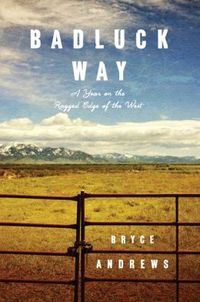
Out of work with some ranch hand experience, a Seattle native answered an advert requiring adaptability and gumption. He worked for a year on the Sun Ranch, next to Yellowstone and crossing an important wildlife corridor. BADLUCK WAY is the memoir of that year in Montana and the lessons it taught, both about wildlife and about the self.
Wolves were reintroduced to Yellowstone National Park in 1995, as top predators of the ecosystem which was then producing too many elk and deer, which destroyed the trees. Ranchers have had to find an uneasy equilibrium as wolves, not understanding fence boundaries, occasionally prey on cattle. At the Sun ranch, full of streams, woods and steep canyons, the aim was to move the cattle around to minimise conflict with the ecosystem. Andrews had all this explained to him at the start of his contract. He'd just caught horses that had wintered out, and was keen to fit in to the ethos. The wolves were fighting their own battle against diseases and had not so far been a problem.
Andrews describes the hard repetitive physical work of ranching, from mending fences to driving cattle. Predators abounded, grizzlies, black bears, lions, coyotes and wolves, so he would often come across elk bones. He stayed out with herds at night, listening for sounds of distress. The object was to scare off wolves from the cattle, and leave the land to wild creatures over winter. Some wolves had radio collars fitted, which helped to track the pack. Still, the ranch owner explains that cattle ranching doesn't make a profit, and tourism is unlikely to pick up the difference. Every animal counts. And in late July, the wolves did finally get short enough of elk that the pack started picking on heifers. With four animals lost as the weeks went on, and terrified herds, the ranch hands gained a licence for the inevitable hunt.
Some splendid photos illustrate the start of each chapter, including a young wolf which Andrews helped to catch and radiocollar. Less easy on the eye are the interspersed italics which tell a wolf's eye view of the summer. The indelible memories Bryce Andrews describes are fascinating reading and tell us about the nature of compromise. BADLUCK WAY is an evocative, informative and sometimes saddening read.
No excerpt available.








 © 2003-2026