As I've read all the Little House books by Laura Ingalls Wilder, and some of her daughter's books, I was fascinated to read this biographical novel. Taking their unpublished letters and diaries, and a wealth of published material from Rose Wilder Lane's thirty-year writing career, Susan Wittig Albert has compiled a look at the people and process behind the famous books. Didn't we all want to know what happened after Laura married Almanzo?
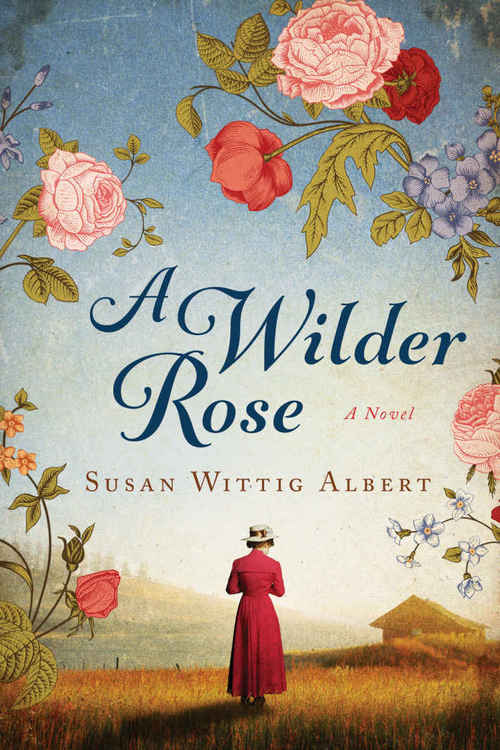
A WILDER ROSE is revising By The Shores of Silver Lake as the book opens in the late 1930s, putting aside her own work to finish her mother's book. Already in print are Little House in the Big Woods, Farmer Boy and On The Banks of Plum Creek. Rose's name isn't on them, though her writing skills prepared her mother's pioneering stories. Rose has work published in her own name, such as Let The Hurricane Roar, (which is very similar in theme and style). She's lived in Albania, Columbia and New York, contributing to papers and getting a good grip on the publishing world, which is just beginning to open quality children's literature imprints. Laura lives with the infirm Almanzo on a farm in the Ozarks, scribbling remembered stories and maintaining the polite fiction that she is the sole author.
Rose speaks to her friend, journalist Nancy Lee, who knows the truth, about her complex relationship with her mother. Nancy persuades her to talk about her life. Rose took a job as a telegraph operator aged seventeen, and had not lived at home since. She'd married and divorced, travelled in the 1920s and '30s, writing for magazines. Between earthquakes and Mussolini's invasion, Albania became no longer safe, so Rose came home, supporting her parents as their farm provided a bare subsistence. The diminutive, strong-minded Laura needed to know that she was safe. But Rose hates the parochial outlook of rural folks, the unending drudgery of a simple farmhouse. She has a travelling companion who later writes the Sue Barton nursing books, and they plan to build a farmhouse with electricity and plumbing. Having grown up dirt poor, Rose saves and invests, and persuades her elderly parents to move into the new home for which she has borrowed rather than raid her comfortable stocks.
All too soon, in two days the markets lose thirty billion dollars. All Laura's family were writing women, and she is penning farming columns for a local paper. Now she brings Rose the first chapters of her autobiography, and as magazine work has dried up, Rose gets to grips with refining the tale. Pioneer Girl doesn't sell to magazines but Rose decides to wring a children's book from the early chapters. Laura is determined that it must not be fictionalised... and they need money to pay the mortgage and bills, as their investments have collapsed. Rose has a background of ghost-writing and knows agents and publishers. She turns the first-person narrative into a third-person one and goes to New York.
It's easy for me to sit here and say, "Those people were so stupid for investing their hard-earned money and taking on debt." Yet knowing that it happened to my friends in recent years, I'm still thinking it as I read. People took the advice of banks and financial advisors, and bought stocks. They did not have the refined comment on politics and economics of today's media at their fingertips. Even those who spent their money on workshops and stores found their clients were unable to spend. Ironically the lack of work for Rose, and the ease from lifelong hard work for her mother, meant the collaboration could take place which gave us a cherished series of recollections.
As a writer myself I found the process fascinating by which the series took shape, rejected, accepted with conditions, rewritten time and again. Laura resented letting Rose make major changes, but that was the only way that the books would get published. Rose was a jobbing writer and knew her trade. She said that the rejection letters were the best thing to happen, because they forced Laura to see that Rose was right. And the books they each wrote gave readers courage during the Depression. The bleak years of dustbowls were hard to read, too similar to today's challenging times, but somehow these women supported themselves.
Susan Wittig Albert is known for her mystery series titled after plants such as rue and indigo, but she is also past Professor of English in Texas and New Orleans universities, and a Doctor of Philosophy. She supports women writers, social and human rights causes, and A WILDER ROSE explores all of these themes.
No excerpt available.









 © 2003-2026