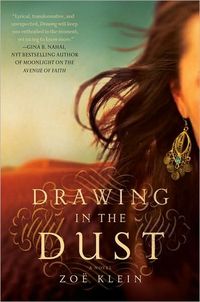
Summarizing the plot does not give ample power to this work. The storyline itself could be summed up as a woman's tale of archeological conquest, self-discovery, obsession and religion in the Middle East, as Page Brookstone risks her career and her reputation by listening to a couple who want an archeologist's perspective on their haunted house. However, that summary is just the bare bones (a very bad and intentional pun) of the work. Instead, DRAWING IN THE DUST challenges the ideas of relationships between academia and religion, of emotion and analysis, and of personal versus global achievement.
Despite the contemporary grittiness of the setting, the elaborate tapestry of character interactions that demonstrates the intermingling of cultures in Israel, and the intricate details of the process and thrill of discovery within archeology, Klein's novel has a softness and a sweetness to its depictions of lover's words and human emotion. An excellent book, DRAWING IN THE DUST demonstrates many levels of achievement that will engage readers who enjoy various styles of writing.
No excerpt available.









 © 2003-2026