
Purchase
The Battle for Afghanistan, 1839-42
Knopf
April 2013
On Sale: April 16, 2013
560 pages
ISBN: 0307958280
EAN: 9780307958280
Hardcover
Add to Wish List
Non-Fiction
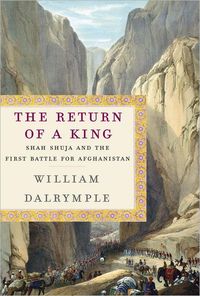
From William Dalrymple—award-winning historian, journalist and travel writer—a masterly retelling of what was perhaps the West’s greatest imperial disaster in the East, and an important parable of neocolonial ambition, folly and hubris that has striking relevance to our own time.
With access to newly discovered primary sources from archives in Afghanistan, Pakistan, Russia and India—including a series of previously untranslated Afghan epic poems and biographies—the author gives us the most immediate and comprehensive account yet of the spectacular first battle for Afghanistan: the British invasion of the remote kingdom in 1839. Led by lancers in scarlet cloaks and plumed helmets, and facing little resistance, nearly 20,000 British and East India Company troops poured through the mountain passes from India into Afghanistan in order to reestablish Shah Shuja ul-Mulk on the throne, and as their puppet. But after little more than two years, the Afghans rose in answer to the call for jihad and the country exploded into rebellion. This First Anglo-Afghan War ended with an entire army of what was then the most powerful military nation in the world ambushed and destroyed in snowbound mountain passes by simply equipped Afghan tribesmen. Only one British man made it through.
But Dalrymple takes us beyond the bare outline of this infamous battle, and with penetrating, balanced insight illuminates the uncanny similarities between the West’s first disastrous entanglement with Afghanistan and the situation today. He delineates the straightforward facts: Shah Shuja and President Hamid Karzai share the same tribal heritage; the Shah’s principal opponents were the Ghilzai tribe, who today make up the bulk of the Taliban’s foot soldiers; the same cities garrisoned by the British are today garrisoned by foreign troops, attacked from the same rings of hills and high passes from which the British faced attack. Dalryrmple also makes clear the byzantine complexity of Afghanistan’s age-old tribal rivalries, the stranglehold they have on the politics of the nation and the ways in which they ensnared both the British in the nineteenth century and NATO forces in the twenty-first.
Informed by the author’s decades-long firsthand knowledge of Afghanistan, and superbly shaped by his hallmark gifts as a narrative historian and his singular eye for the evocation of place and culture, The Return of a King is both the definitive analysis of the First Anglo-Afghan War and a work of stunning topicality.
 Media BuzzMorning Edition - April 25, 2013
| 











 © 2003-2026