Penguin Press
August 2023
On Sale: August 15, 2023
336 pages ISBN: 0593489373 EAN: 9780593489376 Kindle: B0BDD9FPD2 Hardcover / e-Book Add to Wish List
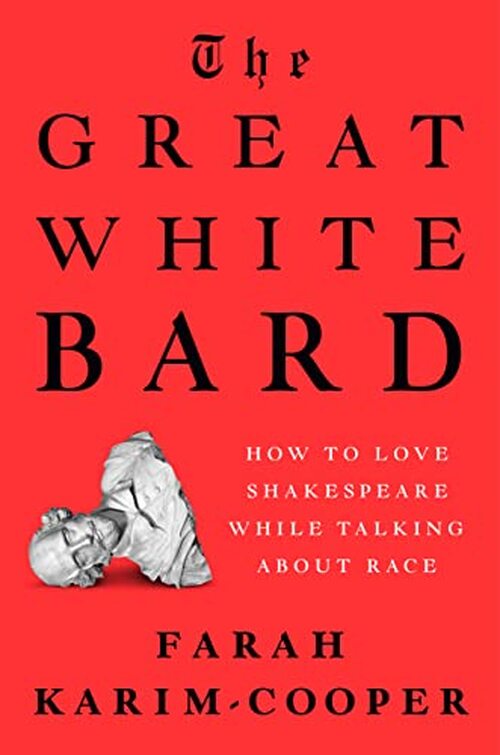
A clear-eyed look at the works of Shakespeare through the lens of race, by Director of Education at Shakespeare’s Globe Theatre, Farah Karim-Cooper
Consider the dead white male author. No intersection of identities could sound less equipped to address the dire racial inequality that plagues Western society. Now consider Shakespeare, the most venerated of these authors, and we have before us what seems like a cultural relic, all too easy to dismiss.
Farah Karim-Cooper, Shakespeare scholar and head of higher education and research at the Globe Theatre, asks us to take a step back from this initial reaction. The first step, she says, is to take him off his pedestal. Karim-Cooper’s deft analysis and deep love of Shakespeare generate an account of his works that confronts their complexities, and those of British society and the English-speaking world, through the lens of race. Thinking about Shakespeare through the lens of race may be discomfiting at times, but the depth of understanding that it yields is worth the challenge.
In The Great White Bard, Karim-Cooper contends with Shakespeare as neither an idol nor an irrelevant fossil, but as a writer whose works are deeply human and comprehensible by all who actively engage with them. From examining the texts themselves to considering the conventions of the plays’ staging, Karim-Cooper unflinchingly interrogates how Shakespeare, both then and now, has been shaped by race.











 © 2003-2026