
Purchase
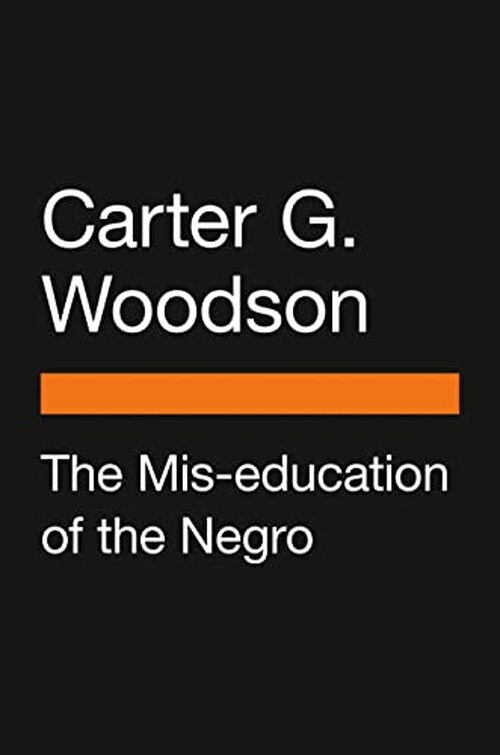
THE MIS-EDUCATION OF THE NEGRO
By: Carter G. Woodson
Penguin Classics
January 2023
On Sale: January 31, 2023
224 pages
ISBN: 0143137468
EAN: 9780143137467
Kindle: B0B1BSBV95
Paperback / e-Book
Add to Wish List
Historical | Multicultural African-American
The Mis-education of the Negro (1933) is Woodson’s most popular classic work of Black social criticism, drawing on history, theory, and memoir. As both student and teacher, Woodson witnessed the distortions of Black life in the history and literature taught in schools and universities. He argued that there was a relationship between these distortions and the violence that circumscribed Black life in the material world, declaring, “There would be no lynching it if did not start in the schoolroom.” Woodson’s primary focus was the impact dominant modes of schooling had on Black youth. From Emancipation through the 1930s, white Americans continued to control the institutional and ideological development of Black schools, based on a system of knowledge that reinforced ideas of Black inferiority.
Across the country, Black teachers organized to make their curricula more relevant for students, and they critiqued the studious omission of Black life in formal curricula, anticipating many of the ideas appearing in Mis-education two decades later. Woodson wrote that the overrepresentation of white people and narratives of white achievement in curricula presented an outsize image of whites and their importance in the history of human progress. These distortions had the power to motivate white students to achieve and aspire and demotivate students of races that suffered under the hand of white supremacy. They cultivated an aspiration to whiteness among Black people and/or led them to despise their own race for its supposed lack of achievement. This was a systematic process of mis-education, articulating an aspect of Black America’s experience that scholars before and after Woodson recognized and worked to challenge.
Woodson argued that students, teachers, and leaders needed to be educated in a manner that was accountable to Black experiences and lived realities, both past and present. With current debates over teaching race in U.S. classrooms, the ideas associated with Mis-education continue to resonate today.
| 











 © 2003-2026