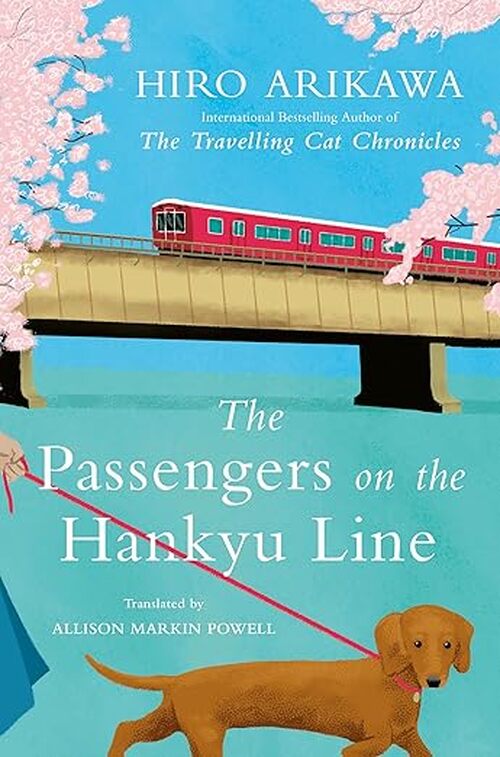
As the ordinary passenger train runs every ten minutes between the towns of Takarazuka and Nishinomiya, we meet a few of the passengers. Through their personal, interacting stories, we experience life in modern Japan. THE PASSENGERS ON THE HANKYU LINE include young men and women, a grandmother, a child and a dog.
I found the tales of the Hankyu Line train a friendly set of stories, full of modern wisdom and critical of bad manners. Passengers may have previously met, such as Masasashi and Yuko, a pair of shy young workers who keep seeing each other in the library. Or, they may not know anyone and be in need of a relocation. Such as Shoko, who commits the social insult of wearing a fine white dress to a co-worker’s wedding – she has a reason. An insecure young student, Misa, puts up with her boyfriend being unpleasant to her in public. She starts to wonder where she would go if she moved in with Katsuya and he became abusive. Maybe a better choice is needed – it takes a word of advice for her to become decisive.
My favourite pair is a senior lady called Toki, and her granddaughter Ami who would love her to adopt a puppy. As Toki now lives alone, it seems ideal. Six months later, we meet the same cast again, and the train is running in the reverse direction. The puppy, a Dachshund, is a talking point. But more so, the rudeness of other passengers dominates conversations and thoughts. Oh, those rude women flaunting designer handbags and cackling about going to an expensive lunch. Rude young men pushing ahead of ladies, snapping at children. Rude schoolgirls pretending to like another girl while being mean to her. In an incredibly polite society, with formal language, good manners mean so much.
Allison Markin Powell the translator has produced a light and human feel to the work by Hiro Arikawa, a popular novelist. Earlier works dealt with a travelling cat. THE PASSENGERS ON THE HANKYU LINE comes across to me as a Japanese version of any Maeve Binchy book, a series of interlocking shorts that give glimpses into daily lives and turning points. This is also a much more cheerful atmosphere than The Boy And The Dog by Seishū Hase, which looked at crime and loss after the tsunami in 2011. People are looking to the future, one with cherry blossoms, mountain hikes, and new love. I recommend the read to older YA and adult readers.
No excerpt available.







 © 2003-2026