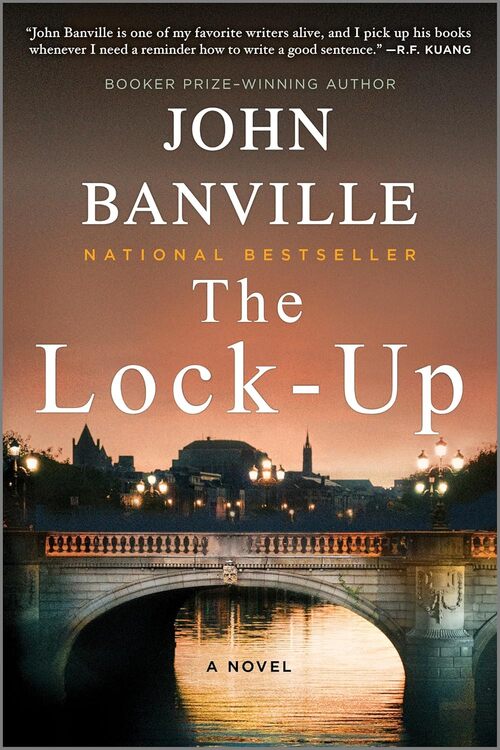
In the dreary setting of 1950s Dublin, another case begins for pathologist Dr. Quirke and DI St. John Strafford when a body is found in THE LOCK-UP. A car was parked in a lock-up garage and a dead woman was in the driver’s seat. It looks as though she committed suicide, but the pathologist is not so sure.
Rosa Jacobs was a young trendy student following in the footsteps of her older sister Molly, a journalist working abroad. Their family came to Ireland to escape the horrors of the World War II era. But sadness has followed them, even as the continent tries to find a footing after destruction. Rosa didn’t seem to have a motive to either die or be killed, so the police started looking at those she knew. This includes the Kesslers, a German industrialist family living surprisingly well in Wicklow.
This may not be the best entry to an ongoing series. Quirke and Stafford have recently returned from a tragic encounter in Spain. Much of their thoughts and words follow on from that, and the men are weighed down by consequences. It’s hard to like either one. To be frank, I didn’t see very much detecting, and throughout the slow-paced tale, there is an enormous amount of drinking spirits, smoking cigarettes and talking in men’s clubs and pubs. One of the worthies also sleeps with a woman connected with the case, without ever wondering if this is appropriate. Maybe that’s what men did in the 1950s. The implication is that people behaved this way because there was no television, but Dublin had cinema, radio, and theatres galore. Bram Stoker, author of Dracula, started out as a theatre critic during his evenings while working in Dublin’s civil service.
Other topics explored include the nascent land of Israel, but we learn about it from Dublin – interesting to see what people knew and may have considered about the potential for trouble. John Banville, a long-established Irish author, has researched the period and placed his characters in some awkward positions. THE LOCK-UP is less a crime story and more an exploration of the times, with references to noteworthy buildings and establishments, and a wry smile at the political influencers of the day. While I’m always interested in historical Irish stories, I didn’t love the read, because men are seen to have all the power, and women trying to change the world are likely to meet a bad end. The next in the Quirke and Strafford series may be more cheerful.
No excerpt available.









 © 2003-2026