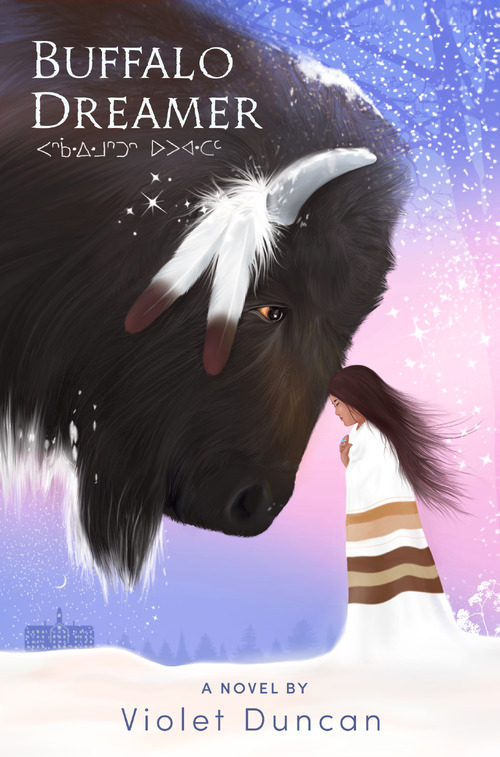
Summer is a teen girl who goes with her family to visit relatives in Canada, appropriately during the summer. Most of all she is delighted to see her cousin Autumn, but she enjoys time with her grandparents and aunties, soaking in the knowledge of tribal life. BUFFALO DREAMER also tells the story of a girl in an earlier time, who did not get these privileges.
Young Summer has Cree and Apache heritage. Her First Nations family were previously shamefully treated by the state. Children were removed at the age of five and locked in residential schools. The idea was to turn Native children into people just like all the other residents of Canada. Summer’s grandfather was one such child, and he seldom speaks of those days.
This year, wistful dreams come to Summer, about a girl called Buffalo Dreamer, renamed Mary. When her friend Ann disappears at the residential school, Mary decides she has to escape – but it’s winter. Will she be a survivor, end up in a mass grave at the school, or die in a snowdrift forever unfound? Summer and Autumn try to unravel the mystery.
This is a novella-length story, just right, I think, because longer might be too sad for young readers, and shorter would have to skimp on either modern or historical events. The author Violet Duncan draws on her personal and historical connections to bring to life the experiences of brave young people. What can today’s tribal people do to commemorate their dead, and how can everyone else help them? Some suggestions are shared and we see that it’s important to consider the feelings of older folks. Many groups around the world were victims of institutional abuse, and children were the easiest to bully. We can take a lesson about standing up against bullying from BUFFALO DREAMER. This is a powerful story that is suited to bright young people from ten to upwards and interested adults. I think the topic and length would make the book well-suited for classroom discussion.
No excerpt available.







 © 2003-2026