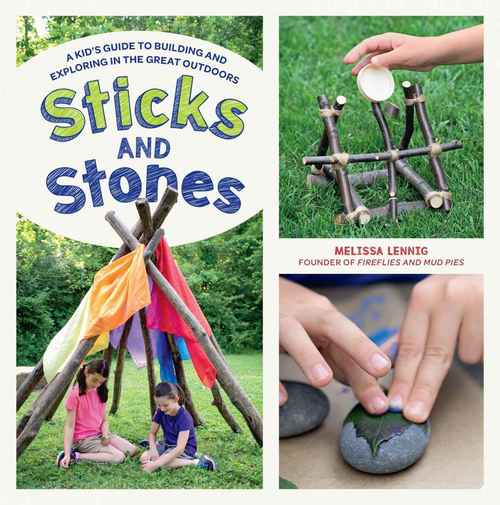
With a subtitle like, A Kid's Guide to Building and Exploring in the Great Outdoors, you can be sure this book will come in useful over summer. STICKS AND STONES are readily available play materials, they don't need to cost anything except a little time, and the energy expended in gathering and constructing makes the activity almost a sport.
If you weren't a Guide or Scout, or you've forgotten, you will be surprised and delighted by the contents of this helpful, creative handbook. The big full colour photos are an inspiration by themselves! Parents and teachers will be interested to see thirty activities which are explaining and using the principles of STEM or STEAM, which are becoming buzzwords in education. Science, Technology, Engineering, Art, Maths. Well, how does a tripod stay up? How does a well-made raft float and carry weight?
Another important factor which is explained right at the start, is that kids today have more inclination to stay indoors, looking at screens, following someone else's creative work. The whole getting outdoors idea means they have unstructured play time, and have to use their bodies and develop skills like motor and dexterity skills. They should also learn to express creativity with a whole pile of sticks and some great starter ideas. I would also remark on the teamwork needed to construct some of these projects. Co-operation works better than squabbling.
Nature has dangers and nuisances, such as water and insect bites, and the author Melissa Lennig recommends supervision of the kids, especially when tools or campfires are involved. Her own children giggled and enjoyed all the activities. She provides a list of what should be in a small survival pack to carry outdoors. Melissa is from upstate New York, took a Masters Degree in counselor education, and now lives with her family in Columbus, Ohio.
One of the simplest constructions is a tripod; this introduces knotting, and uses given are hanging a pot over a campfire, growing beans, and making pendulum art. Making a bird table or bug hotel teach nature appreciation, as does damming a stream which also teaches engineering. As the book goes on the projects, become a little more complex, requiring more time and teamwork, but they should all be done in a couple of hours. I love it, and think of the fun family photos this book STICKS AND STONES could provide.
No excerpt available.









 © 2003-2026