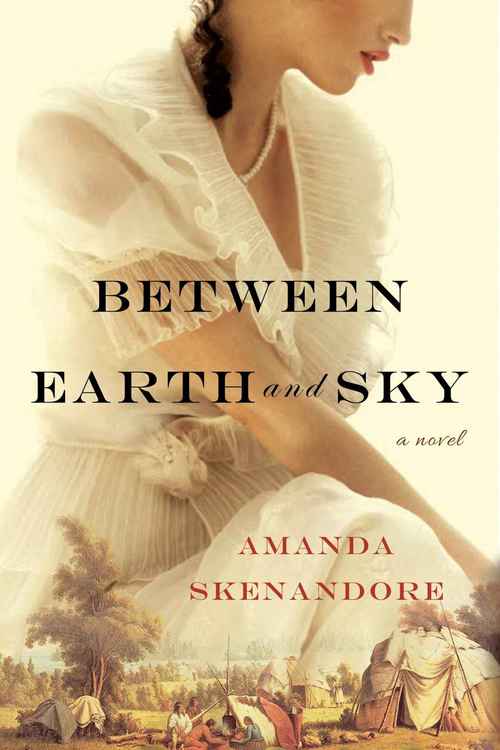
A child sees a truckload of young children arrive at her school. These are not playmates; they are Indian children from the reservation, and her missionary parents intend to teach them. The year is 1881 and the location Wisconsin, and neither young Alma nor the newcomers are allowed to talk back to their elders. Alma questions the changes imposed on the Indian children, but is told "it's for their own good."
BETWEEN EARTH AND SKY skips forward to Philadelphia of 1906, when one of the children, Harry Muskrat, has been charged with murder. Alma, married to lawyer Stewart Mitchell, reads about it in the newspaper and asks her husband to make inquiries. She considers it likely that her Indian friend has been framed.
Reading about the callous handling of the Chippewa children is unsettling; we know it would not happen nowadays, and at least the boys and girls were not given infections nor starved. But stuffing a child's mouth with lye soap? Some readers may find these scenes distressing, as Alma did; Alma herself is treated little better. Small wonder that the lonely, curious girl enters the secret world of her classmates outside school. This part I did enjoy.
Stewart seems like a sensible, forbearing man. I am just surprised that he didn't know about checking his lame horse's hoof for stones as this would surely have been common knowledge. Other details are pressed like flowers in the pages of this book, preserving customs and aspects of life, intricately researched. We see many words of Native languages, inquire about land allotments, and peer around corners of neglected old forts. The author Amanda Skenandore tells us that she based her tale on historical cases, amalgamated and fictionalized.
Gentle Alma is easy to like and admire, a woman of her time throughout, revealed as still somewhat naïve when adult. BETWEEN EARTH AND SKY would be a useful read for book clubs and can be seen to relate to issues of environmental despoliation today. We need to learn from lessons of the past, not blot them out, and some readers will undoubtedly be unfamiliar with aspects of the history which is the backdrop for the actors. I admire Amanda Skenandore for her careful research and skillful writing.
No excerpt available.







 © 2003-2026