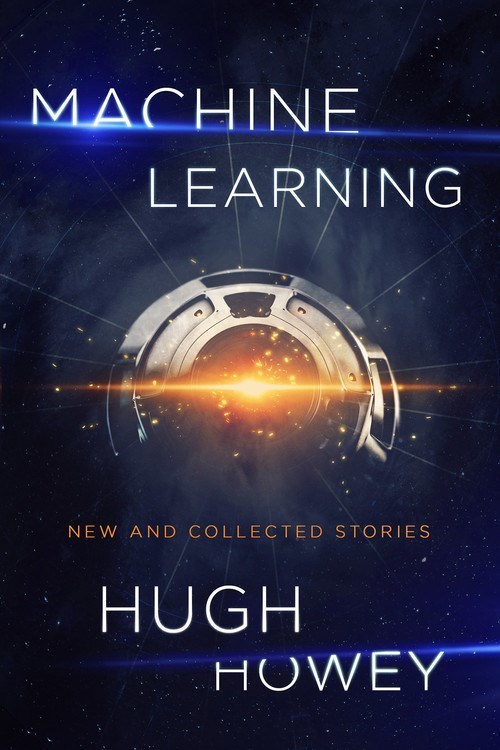
Having read the bestselling book MACHINE LEARNING. Watch out, this man's stories are addictive.
"The Walk Up Nameless Ridge" deals with climbing a mountain peak on another planet, higher than Everest by a large margin. The nature of obsession and glory are considered, as is the realisation that in any accomplishment, we are working with the gifts of others and the support they have provided. And yes, it's cold at the top.
"Second Suicide" looks at an alien invasion of Earth, from the point of view of one of the aliens, a tentacled, eye-stalked warrior who, if he dies, will get grown again in the tanks and sent back to battle. He doesn't question his orders, it's just what he does.
"Machine Learning," the title story, examines what it may take to build a space elevator. Like any giant project, there may be loss of life. Will the machines think it worth the risk? After each tale, Howey adds his reflections, and in this case, he comments on the automated powering and piloting of his sailboat.
Other stories question the Internet of Things, asking how wise it is to have online fridges and room vacuums, or private ownership of an AI computer. Howey's iconic world of the Silos, storing the dregs of humanity from a global apocalypse, is revisited in stories such as "In The Mountain," but not everyone will be delighted with these continuations. Nor indeed is everyone delighted by the concept of marrying androids or the idea of going to school on Mars. This timely look at our near future and possible futures will be welcomed by all Howey's fans, and by folks who read science fiction in small bites, the right size for a bus queue or a lunch break.
"Peace In Amber," the final tale, is odder; partly an alien abduction tale which, to be honest, I hardly read, because wrapped around it was the author's experience of being aboard his yacht in the shadow of September 11th in New York. The emotional honesty and intensity of detail will linger in the reader's mind long after they close the book. Personally, I felt that the abduction was not needed, but quite likely the writer did feel that it was needed to give himself a break from his memories as he worked.
No excerpt available.










 © 2003-2026