From Oedipus Rex to Monster-in-Law, stories about romantic love are often equally stories about parental love -- and hate.
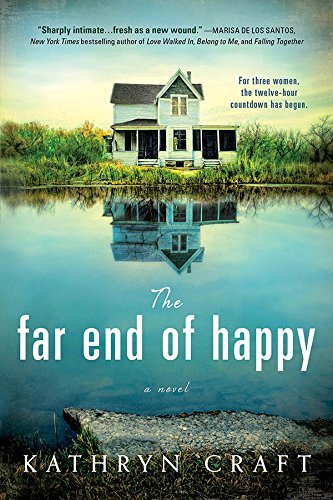
Kathryn Craft's novel, THE FAR END OF HAPPY, follows in this tradition. It is the story of a man's suicidal standoff with police. Which is really the story of a ruined marriage. Which is really the story of three mothers.
At the opening of the novel two women are trying to do right by their children. Ronnie, a 35-year-old journalism-trained farmer, is getting her two young sons ready for school while keeping an eye out for Jeff, her soon-to-be ex-husband. Jeff is supposed to move out that day. In another part of town, Ronnie's mother, Beverly, is surfing online listings for a place that Ronnie and her boys can live more permanently.
The third mother, Jeff's mother, Janet, is enjoying a breakfast of pumpkin pie and coffee spiked from her trusty flask -- a detail that will become tragically unsurprising as the day progresses.
What Ronnie expects to be a stressful day turns into a hellish one when Jeff, drunk and waving a shotgun, turns up at the house and threatens to kill himself. Ronnie, concerned only for the safety of her children, calls 911.
The book is broken into eleven sections for the eleven hours Jeff, holed up in the office of their farm store, spends in the ensuing standoff with police. But within the hour-by-hour story of the action, flashbacks show the longer arc of Jeff's life from the points of view of Ronnie, Beverly and Janet. This fluidity underlines one of the principle concerns of the book: what do the minutes, hours and days of a life add up to? When Jeff takes the tally his answer is: not much.
He writes to Ronnie, "I have nothing positive to offer anyone. Why else would someone spend twenty years tending the same bar?"
The reasons for Jeff's suicidality are complex and various. His finances are in a shambles, his marriage is about to end, he works a dead end job. But as the tale unspools, it becomes more and more obvious that Jeff's relationship with his parents, and even Ronnie's with hers, form the undergirding of his depression.
Remember Janet's flask? She is medicating herself for the pain that comes with feeling unloved, just as she made Jeff feel throughout his childhood. Ronnie's need for stability and meaning that runs so counter to Jeff's more go-with-the- flow outlook stems from the constant instability Beverly's string of boyfriends caused. And Beverly is herself still dealing with a pain that goes back thirty-five years.
This is where Craft excels, in telling a complex, compassionate tale. The present day scenes of the standoff are less compelling. The dialogue is wooden and the pace languid. But that is not the real story here, anyway. The real story is the way the dots of three women's lives connect to form a picture of a troubled man.
In a poignant understatement, Ronnie sums up THE FAR END OF HAPPY: "Mother-child relationships are complicated."
No excerpt available.








 © 2003-2026