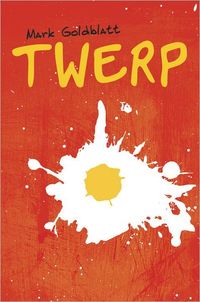
Stuck in school and bored, Julian is given the assignment of writing stories about himself. He describes his life and pals so well that he is excused Shakespeare if he keeps writing. With each instalment we see a little further into his personal world, battles, jerky conversations, romantic inclinations and all.
TWERP is a nickname based on Julian's surname Twerski, and we first see this kid being dared to throw a stone among a flock of pigeons, and hoping not to hit them. When one is injured he is told that he'll have to kill it to stop it suffering, but unable to do that, he brings it home and tries to help it. Messing around with a box of fireworks means one kid gets his eyebrows burnt off and a lesson is learned, though the kids keep hanging around a derelict site. A bigger boy from Guatemala has joined the school, and Julian starts getting to know him, finding that he's a decent sort. Just as in Cyrano de Bergerac, Julian is asked to write a Valentine's love letter for a friend, and he makes a pretty good job of it, first consulting poetry. He's a bright kid, and Jillian is a bright girl, and she can figure out who wrote the letter, according to Julian's older sister. So the boys discover early that romance is not simple....
Perhaps it was Julian's own lackadaisical manner, but the story didn't grip me as similar young adult tales have. Other tales such as 'Fifteen Days Without a Head' and 'The Elephant of Surprise' have a focal point whereas this looser collection of chapters, though telling the tale of the group of kids, was easier to put down. Some moments were good, such as Julian feeling uncomfortable on a museum trip because he's paired with a girl and they're walking past nude statues. Then the girl says, "So I guess underwear wasn't invented until later."
Julian has growing-up issues to cope with, such as not being the fastest runner in school anymore, learning at Hebrew school, and having his pals fall out with him although he has done nothing wrong. Any young person will face similar challenges of their own and Mark Goldblatt show how keeping a written diary helps Julian to make sense of his life. Many young people would not write so freely in a school exercise so the supportive teacher is a useful prop. TWERP is columnist Goldblatt's first novel for young people.
No excerpt available.








 © 2003-2026