A small community in New Jersey had a large proportion of cancer sufferers. Could the chemical plant in town have anything to do with it? This is the true story of a town that took on big business in a situation where there were never going to be any winners.
Coal tar, a toxin, is used in making dyes, paint, detergent, adhesives and other items. As long ago as 1846 the Swiss authorities found a factory owner guilty of gross negligence in poisoning neighbouring people by dumping waste full of arsenic into the water system. The great chemical factories of Switzerland and Germany were built beside the Rhine River to dispose of waste. By 1910, bladder cancer in aniline factories was recorded as an occupational disease.
As American import tariffs were high, the Swiss firms needed to build factories in the US to gain access to the market. They built in 1920s Ohio, piping untreated waste directly into the Cincinnati River though many thousands of people depended on it for drinking water. The plant became the biggest manufacturer of DDT insecticide. Industrial polluters made the river appallingly toxic and by the 1950s industries were being ordered by the city authorities to clean up outflow or pay fines. Seeing this coming, Ciba- Geigy moved to the small town of TOMS RIVER on the Atlantic coast.
Ciba bought 1,350 forested acres and cleared trees from the central 35 acres. Here their new plant made dyes around the clock, from chemicals such as arsenic, nitrobenzene, toluene, sulphuric acids, lye, mercury and chromium. In 1952 the plant produced four million pounds' weight a year of dye and eighteen million pounds of hazardous waste. Solid waste was dumped in the woods. Liquid waste was dumped into porous sand pits and allowed to drain into the groundwater. Two miles downstream was the town's water supply, and many residents had backyard wells. Lawsuits had already been brought on contaminated groundwater, including some in New Jersey. But Ciba-Geigy was hiring, in a town dependent on egg farms, and that was welcome.
The air was so toxic in the production plant that nylon stockings melted on women's legs. If anyone complained they were told to be grateful they had a job. In 1960 a building exploded. Epicholorohydrin and phosgene gas were concentrated in some production areas. In the 1960s it was noted that workers at Ciba were coming down with cancer. But nobody in authority wanted to ask about long-term health hazards. By 1956 the factory's own drinking wells were contaminated and a plume of pollution had been found 2,000 feet in all directions from the settlement lagoons. In 1959 new waste lagoons were opened beside the river, rubber-stamped by the authorities. Other firms were treating or safely removing hazardous solid and liquid wastes by now, but this was expensive, so Ciba dug new sludge pits and built smokestacks.
The $8 million payroll and booming land prices kept the plant out of trouble. They decided to remove visible pollution by piping the waste directly to the ocean in 1964. The State Department of Health was complaisant despite protests from the shore community of the Barnegat Peninsula. Meanwhile the town's Cadillac dealer sued the factory for contaminating the river. The firm bought his land. A Fish And Game inspector recorded massive fish kills and blamed it on oxygen-depleting discharges by the plant. In 1965 the town's drinking water was found to be contaminated with azines, and the water company hid the information. With the pipeline open people stopped complaining about a filthy river. But hazardous waste was now a cash crop in New Jersey, with farmers paid to allow dumping, and Ciba-Geigy began accepting hazardous waste from other firms too.
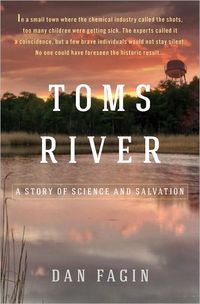
In 1979 a baby named Michael Gillick was born who swiftly developed cancer. His Toms River family felt devastated. The newly-formed Environmental Protection Agency had prosecuted Ciba successfully in 1972 for polluting at sea, but the town's water was thought to be clean. A cluster of childhood cancers made parents think again. In 1984 the pipeline burst, eroded by its contents. Don Bennet, reporter at the 'Observer', began an information campaign. He published state lab results showing that the effluent was highly mutagenic - causing mutations in DNA; he listed 22 hazardous chemicals in the effluent and 109 used at the plant. One resident wrote to Greenpeace asking for help. A banner unfurled on the plant's water tower by activists while others sampled pipe discharges generated massive publicity. A lengthy legal and publicity campaign began. TOMS RIVER by Dan Fagin is excellently informative on a historical and modern basis, and is a frightening read.
If you don't feel concerned about the environment, read this book, and you will. Highly recommended.
No excerpt available.













 © 2003-2026